Houston painting guide
House Painting in Houston: What Gulf Coast Weather Does to Paint, and What Actually Lasts
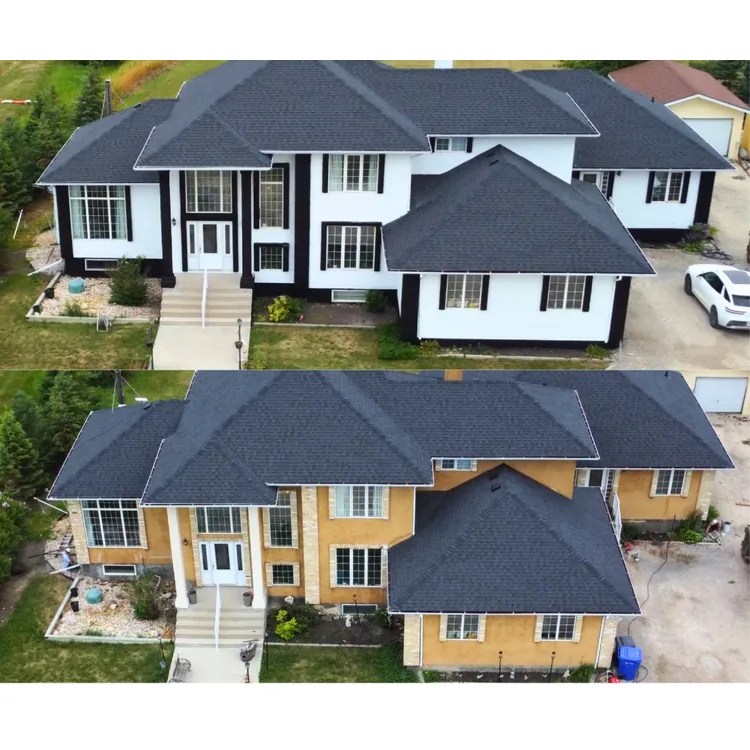
Houston's humidity, surface temperatures and clay soil decide how long a paint job lasts. Dew point rules, season-by-season conditions, realistic repaint intervals and the product specs that survive here.
8 min readCole Merner
House painting in Houston fails for one reason more than any other: the coating was fine, but the conditions were not. Gulf Coast humidity keeps surfaces wet long after they look dry, summer sun drives siding past 140°F, and expansive clay soil moves the whole house under the paint. Get the timing, the surface prep, and the product chemistry right and a Houston exterior holds seven to ten years. Get them wrong and you will be repainting in three.
Here is what actually goes wrong here, and how we schedule and spec around it.
Why House Painting in Houston Is Different
Most painting advice is written for a moderate, dry climate. Houston is neither. Four local conditions do nearly all the damage:
- Humidity and dew point. Morning relative humidity sits above 90% much of the year and summer dew points run in the mid-70s. Latex cures by letting water leave the film. When the air is already saturated, it does not.
- Surface temperature, not air temperature. A 95°F afternoon puts dark south-facing siding at 140–150°F. Paint flashes off before it can level or bond.
- Wind-driven rain. Hurricane-season storms push water sideways into joints that shed ordinary rainfall fine.
- Expansive clay. Houston soil swells and shrinks with moisture. The house moves. Drywall and caulk joints crack.
Each has a different fix. Treating them as one vague "Houston is humid" problem is how paint jobs fail early.
Humidity, Mildew, and the Dew Point Rule
The rule we work to: the surface must be at least 5°F above the dew point, and stay there for the full dry time. Not the air temperature. The surface.
On a July morning the dew point can sit at 76°F while shaded siding sits at 78°F. That is inside the margin. Paint applied there stays soft and picks up surfactant leaching, the brown streaks homeowners see running down fresh siding after the first rain.
Humidity also feeds biology. Mildew and algae are why north-facing elevations look ten years old at year four. Two things address it:
- Kill the growth before painting. Pressure washing alone smears it. A proper wash uses a solution that kills spores, then a full rinse and a real dry-out period.
- Spec a paint with mildewcide in the can, plus an additive on shaded, tree-covered, or north-facing elevations.
Trapped moisture also rots wood. If fascia, soffits, or trim are soft, paint is the wrong answer. Rotted fascia and trim get cut out and replaced first. Painting over rot buys you one season.
Summer Heat, UV, and Storm Season
Why Surface Temperature Rules the Schedule
Most 100% acrylic exterior products list an application range of roughly 50°F to 90°F surface temperature. Houston blows past that for four months a year.
Spray a 140°F wall and the water leaves the film almost instantly: poor flow, lap marks, thin film build, and a coating that never properly coalesced. It looks fine on day one and chalks out in year three.
The workaround is to chase the shade: start on the west elevation in the morning, finish on the east in the afternoon, and never paint a wall the sun is standing on. That is why a serious exterior painting job in Houston is scheduled by elevation, not just square footage.
UV compounds it. Houston gets well over 2,500 hours of sunshine a year, and UV breaks down the resin binder holding pigment to the wall. Deep reds, blues, and dark greys fade fastest, because organic pigments degrade faster than inorganic ones. Choose a dark body color and expect the south and west elevations to need attention sooner.
Wind-Driven Rain and Caulk Failure
From June through November, Houston rain does not fall. It arrives sideways at 40 mph, driven into places that shed ordinary rain without trouble: the top edge of window trim, the joint where siding meets a corner board, the gap behind a shutter.
That is a sealant problem more than a paint problem. Before an exterior repaint we re-caulk every vertical siding joint, window and door perimeter, and trim-to-body transition with an elastomeric or urethane sealant (not painter’s caulk, which is fine indoors and fails outdoors here in two or three years).
For masonry and stucco, an elastomeric coating is worth considering: at 10–20 mils dry film it bridges hairline cracks and sheds wind-driven water. There is one caveat. Do not put elastomeric on wood siding. It is too vapor-closed, and in this humidity it traps moisture behind the film and accelerates rot. You can see how these systems hold up on completed Houston projects in our work.
To sanity-check timing yourself, the National Weather Service Houston/Galveston climate page publishes local normals for temperature, dew point, and rainfall by month.
Expansive Clay Soil and the Cracks Inside Your House
This is the Houston factor that surprises people, because it shows up indoors.
Much of the region sits on expansive clay that swells when saturated and shrinks hard in a dry summer, and a slab foundation rides that movement. The result is seasonal drywall cracking above door frames, at window corners, and along ceiling-wall joints. Homeowners assume a foundation emergency; usually it is normal movement.
What matters is how the crack is repaired. Spackle and paint guarantees it reappears within a year. A repair that holds means taping the joint, floating it wide, and matching the existing texture (orange peel, knockdown, or smooth) so drywall crack repair and texture matching disappears under the finish instead of telegraphing through it.
Once the substrate is stable, interior painting services should use a flexible, high-build acrylic on those walls rather than a cheap flat that shows every patch under low winter sun.
The Best Time to Paint a House in Houston
We paint exteriors year-round, and conditions matter more than the calendar. But the calendar stacks the odds. Here is how the seasons compare:
| Season | Typical temps | Humidity / dew point | Rain risk | Verdict for exteriors |
|---|---|---|---|---|
| Oct–Nov | 60–80°F | Low; dew points drop into the 50s | Low | Best window of the year. Long dry-down, stable surface temps, few delays. |
| Mar–Apr | 65–82°F | Moderate and rising | Moderate (spring storm line) | Very good. Second-best window; book early, expect a rain day or two. |
| Dec–Feb | 45–68°F | Low, but cold fronts | Low to moderate | Workable. Short daylight and 50°F minimums limit the daily window. |
| Jun–Sep | 88–98°F | Very high; dew points 72–77°F | High (daily storms, hurricanes) | Worst window. Surface temps exceed spec; afternoon storms wash fresh coatings. |
A few notes on that table:
- October and November win because the dew point drops. That, not the milder air, is what lets a coating actually cure.
- Spring is genuinely good, and it is when every contractor in the region is booked. If you want a full exterior repaint in March, call in January.
- Winter is more usable than people expect. The constraint is the 50°F minimum surface temperature and about six usable daylight hours, not the cold itself.
- Summer is not unpaintable, just expensive in lost days: start at 7 a.m., stop by early afternoon.
What to Do Instead in July and August
Move the work indoors. Interiors are unaffected by dew point because the house is conditioned, and kitchen cabinet refinishing is ideal hot-weather work (a controlled space and a spray schedule that does not care what the sky is doing).
How Often to Repaint a House in Houston
Houston is harder on coatings than the national average, so the usual repaint intervals run optimistic here. Realistic numbers, assuming prep was done properly:
- Wood and fiber cement siding: 5–7 years. South and west elevations often go two years before the rest of the house.
- Stucco and masonry: 7–10 years.
- Painted brick: 7–10 years, longer with a breathable mineral coating.
- Trim, fascia, and front doors: 3–5 years. These fail first, every time.
- Interior walls: 5–7 years; 3–5 in hallways, kids’ rooms, and kitchens.
If a Houston exterior fails at year three, the cause is almost always prep, not product (paint over chalk, over mildew, or over a wet substrate). That is why our Houston house painters wash, dry, scrape, caulk, and spot-prime before a single finish coat, and why the quote itemizes every one of those steps.
Specifying Products That Survive Houston
Three spec rules carry most of the weight here:
- 100% acrylic latex for exteriors, without exception. Vinyl-acrylic blends cost less and chalk out years earlier under Gulf Coast UV. The manufacturer’s technical data sheets list the exact temperature, humidity, and recoat windows. They are worth reading before anyone opens a can.
- Mildewcide on shaded elevations. Cheap insurance against the most common Houston complaint.
- The right primer for the substrate. Bare wood, chalky old paint, and water-stained drywall each need a different primer. One "all-purpose" primer across all three is how adhesion failures start.
Ask any Houston painting contractor for product names and film thickness in writing. One who will not put the spec on the quote is leaving room to downgrade it, which is exactly what our customers’ reviews tend to mention.
Planning a Repaint This Year
Good house painting in Houston is mostly a scheduling and preparation problem, and you can plan around both. If you are weighing a repaint this year, the fall window fills up by late summer.
For siding-by-siding prep, cost factors, and color advice, see our exterior house painting guide for Houston. We work across Houston, The Woodlands, Katy, Sugar Land, Cypress, Spring, and Pearland. See all our service areas across Greater Houston for the full list.