Houston painting guide
Interior Painting in Houston: Sheens, Prep, Costs and Timelines for a Finish That Lasts
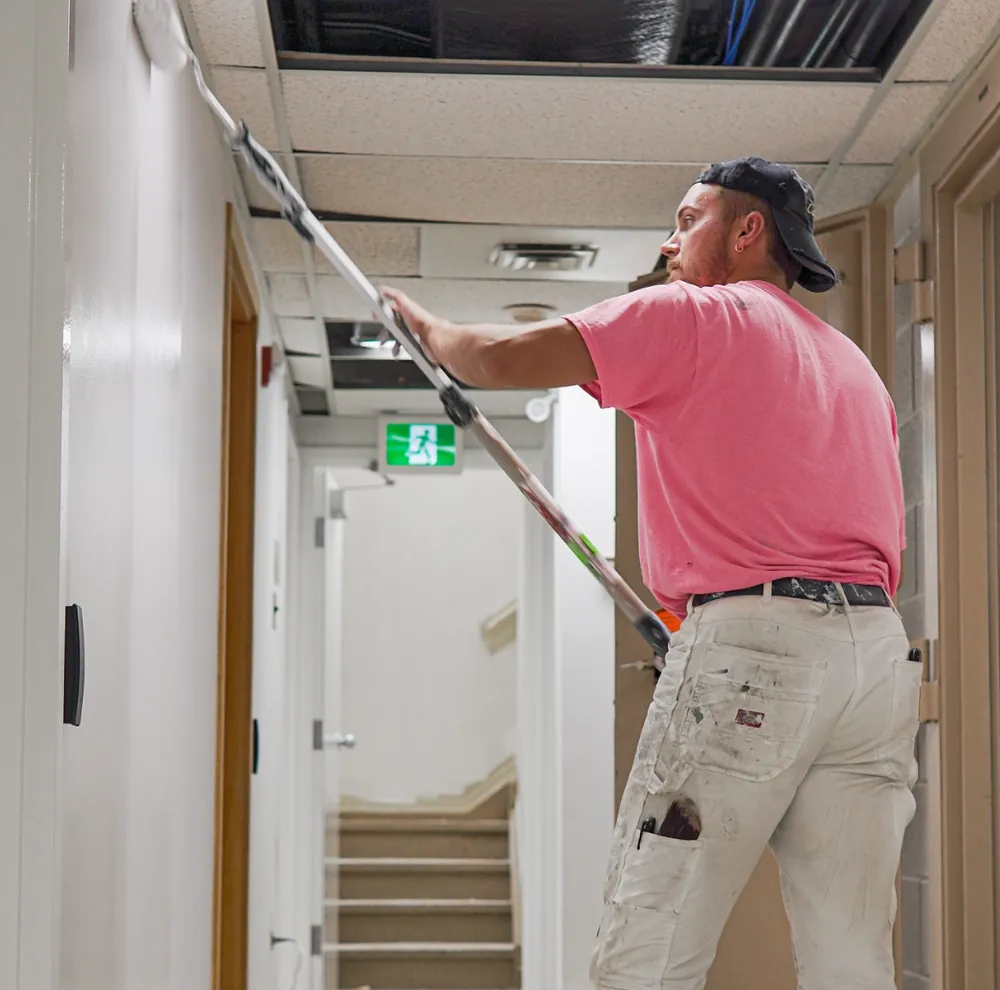
A practical guide to interior painting in Houston: which sheen goes in which room, the prep that stops cracks and stains coming back, what drives cost, how long it takes, and how to hire the right painter.
9 min readCole Merner
Interior painting in Houston looks simple from the outside: move the furniture, roll two coats, put it all back. In practice, the rooms that still look sharp five years later are the ones where someone picked the right sheen for the room, dealt with the cracks and water stains properly, and used a paint made for how that room is actually used. The rest start showing scuffs, patches, and flashing within a year.
This guide covers what we have learned painting Houston homes: how to choose finishes and colors, the prep that matters most here, what drives the price, how long a project takes, and what to ask before you hire a painter.
What Makes Interior Painting in Houston Different
The inside of a Houston home deals with conditions most painting guides never mention. The house is air-conditioned for eight months a year while it is humid outside, and that difference shows up on your walls:
- Seasonal drywall cracks. Houston’s expansive clay soil swells and shrinks, and the slab moves with it. Cracks open above doors, at window corners, and along ceiling joints. They come back unless they are repaired properly.
- Ceiling water stains. AC condensate lines, drain pans in the attic, and roof leaks during storm season leave brown rings that bleed straight through ordinary paint.
- Bathroom and laundry moisture. Steam that is not vented well leads to peeling and mildew on ceilings, especially in older homes with weak exhaust fans.
- Heavy daily wear. Houston homes see a lot of foot traffic, kids, and pets, so hallways and family rooms need a finish you can scrub.
Most of these trace back to the local climate and soil. We cover that side in depth in our guide to Houston weather and house painting. The rest of this article is about what that means once you are inside.
Choosing the Right Paint Sheen for Every Room
Sheen matters as much as color. Higher gloss is tougher and easier to clean, but it shows every dent and patch in the wall. Lower gloss hides flaws but marks more easily. Here is how we match sheen to the room:
| Sheen | Durability | Hides flaws | Best for |
|---|---|---|---|
| Flat / matte | Low | Excellent | Ceilings, formal living and dining rooms, low-traffic bedrooms |
| Eggshell | Medium | Very good | Living rooms, bedrooms, home offices: the everyday default |
| Satin | High | Good | Hallways, kids’ rooms, kitchens, laundry rooms, bathrooms |
| Semi-gloss | Very high | Poor | Baseboards, door and window trim, interior doors, crown molding |
| High-gloss | Highest | Very poor | Front doors, accent furniture, and statement trim only |
Two Houston-specific notes. First, if your walls have been patched after seasonal cracking, satin and semi-gloss will show those repairs under raking light from a window, so stay at eggshell unless the patching is flawless. Second, bathrooms should get a satin with mildewcide built in. Flat paint in a steamy bathroom is a common reason we get called back to a house someone else painted.
Trim, doors, and cabinetry take the most abuse, which is why they get the hardest finish. If the kitchen is part of the plan, cabinet refinishing calls for a sprayed, cabinet-grade enamel rather than wall paint, because cabinet doors see more hand contact than any other surface in the house. Our Houston cabinet painting guide covers that process and its cost.
Picking Interior Paint Colors for a Houston Home
Houston light is strong and warm for most of the year, and it changes how color reads on a wall. A few rules keep you from repainting after the first coat dries:
- Sample on the actual wall, in the actual room. Paint two-foot squares on at least two walls and check them in morning light, late afternoon light, and at night under your own bulbs.
- Watch the undertone. South- and west-facing rooms get intense afternoon sun that pushes warm whites toward yellow. Cooler or neutral whites usually hold up better there.
- North-facing rooms need warmth. Cool greys can look flat and blue in rooms without direct sun. Greige and warm whites help.
- Keep the ceiling separate. A flat ceiling white, or the wall color cut to around 25–50% strength, makes a room feel taller than matching the walls exactly.
Not sure where to start? Browse finished interior projects in our gallery to see how different colors look in real Houston homes, or read our room-by-room guide to the best interior paint colors for Houston homes.
Surface Prep: Where Interior Paint Jobs Succeed or Fail
Paint is the easy part. Most interior painting problems we fix were caused by skipped prep, not bad paint. A proper job moves through these steps in order:
- Protect the room. Move furniture to the center, cover it, mask the floors, and remove switch plates and outlet covers.
- Repair cracks properly. Seasonal cracks get cut open, taped, floated wide, and texture-matched to the orange peel or knockdown around them. Spackle alone comes back within a year. For bigger damage, our drywall repair and contracting crew handles the repair before painters start.
- Seal stains. Water rings, smoke, and marker stains get a stain-blocking primer. Latex paint over a water stain lets it bleed back through within days.
- Clean and degloss. Kitchen walls carry grease and bathrooms carry soap film. Both need to be washed off, and glossy surfaces need scuff-sanding so the new coat can bond.
- Caulk and fill. Gaps between trim and wall get caulked, and nail holes get filled and sanded smooth.
- Spot-prime repairs. Every patch gets primed, or it will show through the finish as a dull spot, known as "flashing."
One more thing for older homes: if your house was built before 1978, the existing paint may contain lead. Any contractor who sands or scrapes it must follow the EPA Renovation, Repair and Painting rule for lead-safe work practices. Ask about it before work starts in older neighborhoods like the Heights or Bellaire.
How Much Does Interior Painting Cost in Houston?
Every home is different, so the honest answer is that it depends on scope. These are the factors that move a quote the most:
- Square footage and ceiling height. Two-story entries and vaulted living rooms need extra labor, ladders, or scaffolding.
- What is being painted. Walls alone cost far less than walls, ceilings, trim, and doors together. Trim and doors are detail work, and detail work takes time.
- Surface condition. Crack repair, stain sealing, and texture matching add time before a single finish coat goes on.
- Color changes. Going from a deep red to a light neutral may need a primer coat plus two finish coats.
- Paint quality. Premium paints cost more per gallon but cover better and last longer, so they often cost less over the life of the job.
| Project type | Typical scope | Main cost drivers |
|---|---|---|
| Single room | Walls only, or walls plus ceiling and trim | Room size, ceiling height, color change |
| Several rooms | Living areas, bedrooms, and hallways | Amount of trim and doors, furniture moving |
| Whole-home interior | Every wall, ceiling, trim run, and door | Total square footage, stairwells, repair work |
| Trim and doors only | Baseboards, casings, crown, interior doors | Linear footage, number of doors, sheen |
The most useful thing you can get is an itemized written quote that lists the rooms, surfaces, number of coats, prep steps, and the exact paint products. That is how our interior painting service quotes every job, so you can compare it line by line with other bids instead of guessing what a single lump-sum number includes.
How Long Interior Painting Takes and What to Expect
Most single rooms take a day. A whole-home interior typically takes three to five working days, depending on size, trim, and how much repair the walls need. A typical day looks like this:
- Morning: the crew arrives, protects the day’s rooms, and starts prep and repairs.
- Midday: primer goes on repairs and stains, then the first finish coat once they are dry.
- Afternoon: second coat, then trim and doors with brush-and-roll or spray work.
- End of day: tape pulled, rooms cleaned, and furniture back in place where the paint allows.
Because the house is air-conditioned, interior work is not affected by the summer heat and humidity that complicate outdoor projects. That makes interior painting a great July or August project while exterior painting waits for the drier fall window. With low-VOC paint, most families stay home through the entire job. Keep the AC running during the project, since steady indoor temperature and humidity help the paint cure evenly.
DIY vs. Hiring a Professional Interior Painter
A single bedroom in a color close to the current one is a reasonable weekend DIY project. Bring in a professional when:
- Ceilings are over 10 feet, or there is a stairwell or two-story entry.
- The walls have recurring cracks, water stains, or texture that needs matching.
- You want crisp, straight cut lines between walls, ceilings, and trim across a whole house.
- You are going from a dark color to a light one, or painting trim and doors to a hard enamel finish.
- You are getting ready to sell and need the house painted, cleaned up, and done on a fixed schedule.
The hidden cost of DIY is not the paint. It is the weekends, the equipment, and the redo when patches flash or the wrong sheen shows every roller mark.
How to Choose an Interior Painter in Houston
Before you sign with any Houston painting contractor, ask these questions:
- Is the quote itemized? It should name the rooms, surfaces, coats, prep steps, and the paint brand and product line.
- Are you insured? Ask for proof of general liability coverage.
- How do you repair cracks and stains? "We spackle it" is the wrong answer for Houston’s seasonal cracks.
- Who is doing the work? Know whether it is the company’s own crew or subcontractors.
- What is the warranty, in writing? A company that trusts its prep will put its warranty on paper.
- Can I see reviews and past work? Read recent reviews from Houston homeowners and look at before-and-after photos, not just stock images.
Local experience matters, too. A crew that works across Greater Houston has already seen how older homes in River Oaks and Memorial differ from newer builds in Katy, Sugar Land, and The Woodlands, and it prepares accordingly.
Get Your Houston Interior Painting Estimate
Good interior painting in Houston comes down to three things: the right sheen for each room, prep that handles cracks and stains properly, and a clear written scope. Get those right and your walls will look good for years, not months.
Our Houston interior painters offer free, no-pressure estimates with an itemized written quote. Request your free estimate or call (346) 379-0159. We serve the entire metro. See all our service areas across Greater Houston.